Understanding the dandruff vs dry scalp difference is crucial for effective scalp care and treatment. While both conditions cause flaking and itching, they have distinct causes and characteristics and require different treatment approaches. This comprehensive guide explores the key differences, symptoms, causes, and evidence-based treatment options to help you identify and address your specific scalp condition effectively.
Table of Contents
Why Understanding Scalp Conditions Matters
Scalp irritation affects millions of people worldwide, yet many struggle to identify whether they’re dealing with dandruff or a dry scalp. The dandruff vs dry scalp difference might seem subtle, but understanding these distinctions is essential for choosing the right treatment approach and achieving lasting relief.
Both conditions share similar symptoms—flaking, itching, and scalp irritation—which often lead to confusion and ineffective treatment attempts. However, the underlying causes are fundamentally different, requiring targeted solutions for optimal results.
This comprehensive guide will help you distinguish between these two common scalp conditions, understand their root causes, and implement effective treatment strategies tailored to your specific needs.
Understanding Dandruff: More Than Just Flakes
What Is Dandruff?
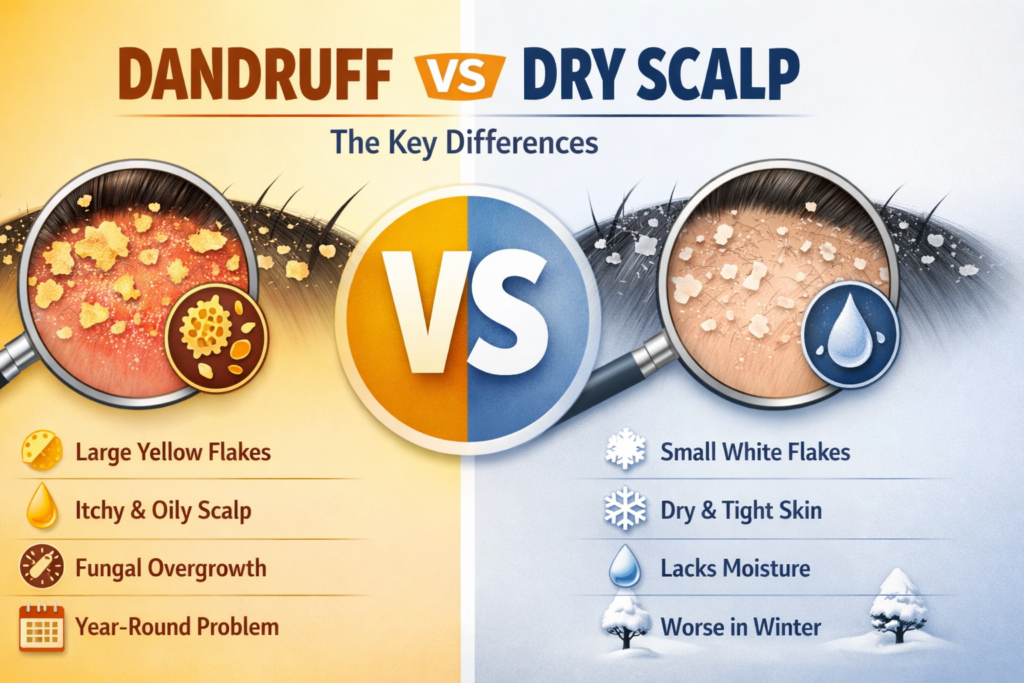
Dandruff is a common scalp condition characterized by the excessive shedding of dead skin cells from the scalp. Unlike normal skin cell turnover, dandruff involves accelerated cell renewal, resulting in visible white or yellowish flakes that often appear oily or greasy.
The primary culprit behind dandruff is Malassezia, a naturally occurring yeast that lives on the scalp. When this fungus multiplies excessively, it feeds on the natural oils (sebum) produced by hair follicles, creating oleic acid as a byproduct. This substance can irritate the scalp in sensitive individuals, triggering inflammation and rapid skin cell turnover.
Key Characteristics of Dandruff
Understanding the dandruff vs dry scalp difference requires recognizing dandruff’s distinctive features:
- Flake appearance: Larger, oily, and yellowish-white flakes
- Scalp condition: Often oily rather than dry.
- Distribution: Concentrated around the hairline, behind the ears, and on the crown.
- Persistence: Occurs year-round, regardless of weather conditions
- Associated symptoms: Mild to moderate itching, potential scalp redness
Common Triggers and Risk Factors
Several factors can exacerbate dandruff or increase susceptibility:
- Hormonal changes: Puberty, pregnancy, and hormonal fluctuations
- Stress levels: High stress can worsen existing dandruff
- Diet: High sugar and processed food consumption
- Immune system: Compromised immunity can trigger flare-ups
- Hair care habits: Infrequent washing or harsh products
- Medical conditions: Parkinson’s disease, HIV, or neurological disorders
Dry Scalp Explained: When Your Skin Needs Moisture
Understanding Dry Scalp Condition
Dry scalp occurs when the skin on your head lacks sufficient moisture and natural oils. Unlike dandruff, which involves fungal overgrowth, dry scalp is primarily a hydration issue. The skin becomes tight, flaky, and irritated due to inadequate sebum production or environmental factors that strip away natural oils.
This condition is often seasonal, worsening during winter months when indoor heating and cold, dry air reduce humidity levels and deplete skin moisture.
Distinctive Features of Dry Scalp
The dandruff vs dry scalp difference becomes clearer when examining dry scalp characteristics:
- Flake size: Smaller, dry, white flakes that feel powdery
- Scalp texture: Tight, dry feeling with possible skin irritation.
- Hair condition: Hair may appear dull, brittle, or lack luster
- Seasonal patterns: Typically worse in winter or dry climates
- Overall skin: Often correlates with dry skin elsewhere on the body
Primary Causes of Dry Scalp
Environmental and lifestyle factors primarily contribute to dry scalp development:
- Weather conditions: Cold temperatures, low humidity, excessive sun exposure
- Over-washing: Frequent shampooing strips natural oils
- Harsh products: Sulfate-rich shampoos, alcohol-based styling products
- Hot water: Excessive heat during washing damages the scalp barrier
- Age factors: Natural oil production decreases with age
- Medical treatments: Certain medications or therapies
Side-by-Side Comparison: Dandruff vs Dry Scalp
| Characteristic | Dandruff | Dry Scalp |
| Flake Size | Larger, greasy flakes | Smaller, dry flakes |
| Flake Color | Yellowish-white | Pure white |
| Scalp Texture | Often oily | Dry and tight |
| Primary Cause | Fungal overgrowth | Lack of moisture |
| Seasonality | Year-round | Worse in winter |
| Hair Appearance | May look greasy | Often dull and brittle |
| Treatment Focus | Anti-fungal ingredients | Moisturizing ingredients |
Diagnostic Methods: Identifying Your Condition
Self-Assessment Techniques
Understanding the dandruff vs dry scalp difference often begins with careful self-observation: The Touch Test: Gently run your fingers through your hair and examine the flakes that fall. Dandruff flakes typically feel oily and may stick together, while dry scalp flakes feel powdery and separate easily.
Scalp Examination: Look closely at your scalp in good lighting. Dandruff often appears alongside slightly oily skin, while a dry scalp looks visibly dehydrated and may feel tight.
Seasonal Observation: Track when symptoms worsen. Dry scalp typically intensifies during winter months, while dandruff remains relatively consistent year-round.
Professional Evaluation
For persistent or severe symptoms, professional assessment ensures accurate diagnosis:
- Dermatological examination: Visual inspection and medical history review
- Microscopic analysis: Examining flake samples under magnification
- Fungal testing: Identifying Malassezia presence for dandruff confirmation
- Allergy testing: Ruling out contact dermatitis or product sensitivities
Treatment Strategies: Tailored Approaches for Each Condition
Dandruff Treatment Options
Effective dandruff management focuses on controlling fungal growth and reducing inflammation:
Anti-fungal Shampoos:
- Zinc pyrithione: Reduces fungal growth and inflammation
- Ketoconazole: Powerful anti-fungal agent for stubborn cases
- Selenium sulfide: Controls cell turnover and fungal activity
Application Guidelines:
- Use medicated shampoo 2-3 times per week initially
- Massage thoroughly into scalp and leave for 3-5 minutes
- Alternate between different active ingredients to prevent resistance
- Gradually reduce frequency as symptoms improve
Dry Scalp Treatment Approach
Dry scalp treatment emphasizes moisturization and barrier repair:
Hydrating Ingredients:
- Hyaluronic acid: Attracts and retains moisture
- Glycerin: Draws moisture from the environment to the skin
- Natural oils: Argan, jojoba, or coconut oil for deep nourishment
- Ceramides: Restore scalp barrier function
Gentle Care Routine:
- Reduce washing frequency to 2-3 times per week
- Use lukewarm water instead of hot water
- Choose sulfate-free, moisturizing shampoos
- Apply conditioning treatments focusing on the scalp
- Consider overnight oil treatments weekly
Prevention Strategies and Long-term Management
Universal Scalp Health Principles
Regardless of the dandruff vs dry scalp difference, certain practices benefit overall scalp health:
- Balanced washing routine: Find the optimal frequency for your scalp type
- Gentle handling: Avoid aggressive scrubbing or harsh brushing
- Product awareness: Read labels and avoid known irritants
- Stress management: Practice relaxation techniques to reduce flare-ups
- Healthy diet: Include omega-3 fatty acids, vitamins, and minerals
Lifestyle Modifications
Environmental Considerations:
- Use a humidifier during dry seasons
- Protect the scalp from excessive sun exposure
- Choose breathable, natural fiber hats and pillowcases
- Avoid excessive heat styling
Dietary Support:
- Increase water intake for overall hydration
- Include foods rich in zinc, B vitamins, and essential fatty acids
- Limit processed foods and excessive sugar
- Consider probiotics for immune system support
When to Seek Professional Help
Understanding the dandruff vs dry scalp difference empowers self-care, but certain situations require professional intervention:
- Symptoms persist despite consistent treatment for 4-6 weeks.
- Severe itching interferes with daily activities or sleep.
- Signs of secondary infection develop (increased redness, warmth, pus).
- Hair loss accompanies scalp symptoms.
- Symptom spreads to other body areas
- Suspected allergic reactions to products or treatments
Professional Treatment Options:
- Prescription-strength medicated shampoos
- Topical corticosteroids for severe inflammation
- Oral antifungal medications for resistant cases
- Specialized scalp treatments and therapies
Common Myths and Misconceptions
Dispelling myths about the dandruff vs dry scalp difference prevents ineffective treatment attempts:
Myth 1: “Dandruff means you don’t wash your hair enough.”
Reality: Over-washing can actually worsen dandruff by irritating the scalp and stimulating more oil production.
Myth 2: “Dry scalp and dandruff are the same thing.”
Reality: These are distinct conditions requiring different treatment approaches.
Myth 3: “Natural remedies are always safer than medicated products.”
Reality: Some natural ingredients can cause allergic reactions or be ineffective for certain conditions.
Myth 4: “You can cure dandruff permanently.”
Reality: Dandruff is typically a chronic condition that can be managed effectively but may require ongoing maintenance.
Conclusion: Empowering Your Scalp Health Journey
Understanding the dandruff vs dry scalp difference is the foundation of effective scalp care. While both conditions can be frustrating and embarrassing, they are manageable with the right approach and consistent care.
Key takeaways for successful treatment:
- Accurate identification is crucial—observe flake characteristics, scalp texture, and seasonal patterns
- Treatment approaches differ significantly between conditions
- Consistency in the chosen treatment regimen yields better results
- Professional consultation provides valuable guidance for persistent issues
- Prevention through proper hair care and lifestyle choices supports long-term scalp health
Remember that scalp health is an ongoing journey rather than a destination. By understanding your specific condition and implementing appropriate care strategies, you can achieve and maintain a healthy, comfortable scalp while boosting your confidence and overall well-being.
Whether you’re dealing with dandruff’s oily flakes or dry scalp’s powdery irritation, the right knowledge and treatment approach can provide significant relief and prevent future flare-ups. Stay patient with the process, as scalp improvements often take several weeks to become noticeable, and don’t hesitate to adjust your approach based on your scalp’s response to treatment.
Frequently Asked Questions (FAQ): Dandruff vs Dry Scalp Difference
1. How can I tell which one I have?
Try this simple test:
Dandruff flakes: Larger, oily, yellowish, stick together
Dry scalp flakes: Smaller, white, powdery, separate easily. Also, check your scalp texture—dandruff often accompanies oily skin, while a dry scalp feels tight and dehydrated.
2. What shampoo should I use for dandruff?
Look for these active ingredients:
a) Zinc pyrithione (Head & Shoulders)
b) Ketoconazole (Nizoral)
c) Selenium sulfide (Selsun Blue)
d) Coal tar (Neutrogena T/Gel) Use 2-3 times weekly, leaving on scalp for 3-5 minutes.
3. What’s best for dry scalp?
Choose moisturizing shampoos with:
a) Hyaluronic acid
b) Glycerin
c) Natural oils (argan, jojoba, coconut)
d) Ceramides
c) Sulfate-free formulas. Wash less frequently (2-3 times weekly) with lukewarm water.
4. Is dandruff caused by poor hygiene?
No! This is a common myth. Dandruff is primarily caused by fungal overgrowth and can affect anyone regardless of hygiene. Over-washing can actually worsen it by irritating the scalp.
5. Can diet affect my scalp condition?
Yes, diet plays a role:
Dandruff: High sugar/processed foods may worsen it
Dry scalp: Dehydration and lack of healthy fats contribute. Both benefit from omega-3s, zinc, B vitamins, and adequate water intake.
6. Are natural remedies effective?
Some can help, but results vary:
Tea tree oil: Has anti-fungal properties for dandruff
Coconut oil: Excellent moisturizer for dry scalp
Apple cider vinegar: May help balance pH. Always patch test first and consult a professional for persistent issues.
7. When should I see a doctor?
Seek professional help if:
Symptoms persist after 6 weeks of consistent treatment
Severe itching disrupts sleep or daily activities
You notice hair loss
Signs of infection appear (redness, warmth, pus)
Symptoms spread to other body areas
8. Could it be something more serious?
Rarely, persistent flaking could indicate:
Psoriasis (thick, silvery scales)
Seborrheic dermatitis (severe dandruff with inflammation)
Contact dermatitis (allergic reaction to products)
Eczema (atopic dermatitis). A dermatologist can provide an accurate diagnosis.
9. Does the weather affect these conditions?
Absolutely:
Dry scalp: Worsens in winter (low humidity, indoor heating)
Dandruff: Can improve in summer (sunlight has anti-fungal properties)
Both: May flare with extreme temperature changes
10. Can stress make it worse?
Yes! Stress affects:
Immune system function (worsening dandruff)
Hormone balance (increasing oil production)
Overall skin health (exacerbating dryness). Stress management techniques can significantly improve both conditions.