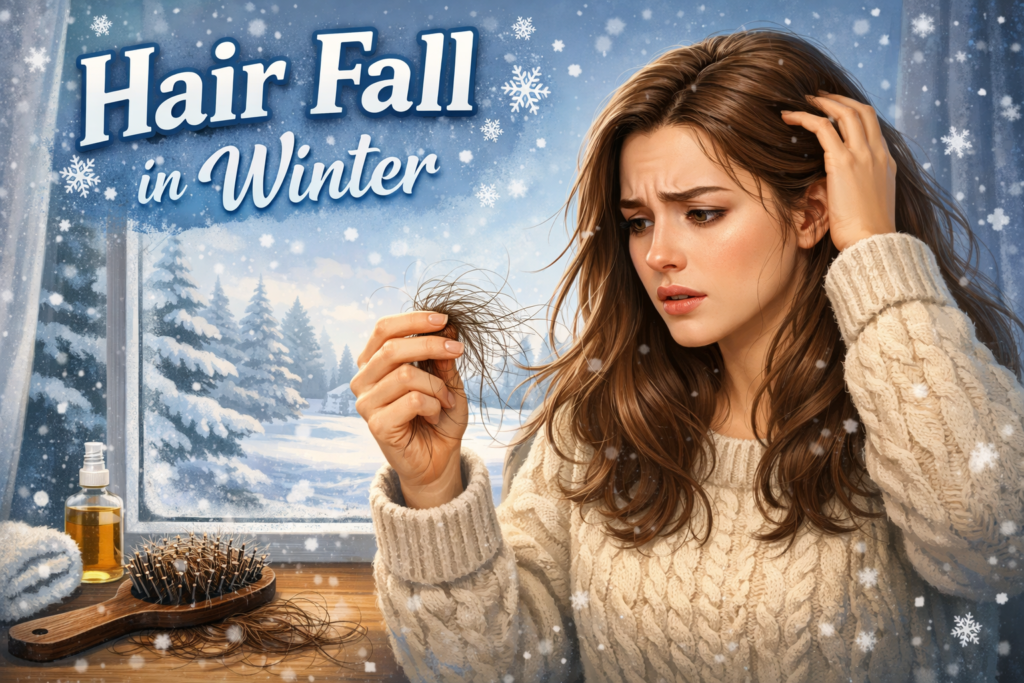
Winter can be harsh on your hair. Low humidity, indoor heating, hot showers, and seasonal stress all contribute to increased hair fall in winter, leading many people to notice it. The good news: most winter shedding is manageable with the right care. This guide explains the top causes of winter hair loss, how to spot symptoms such as a dry scalp and hair fall, and provides practical, dermatologist-backed hair fall treatments for winter. You’ll also get a step-by-step routine, ingredient checklist, and FAQs to help you navigate the season with healthier hair.
Table of Contents
What Is Hair Fall in Winter?
Hair fall in winter refers to increased shedding or breakage during the colder months. It can happen for several reasons:
- Seasonal shifts that increase hair in the resting (telogen) phase
- Dry air that dehydrates hair and scalp
- Lifestyle changes (hot showers, hats, diet, stress)
It helps to know what’s normal. Most people shed 50–100 hairs daily. Consistently losing far more (or noticing clumps in the shower/brush) suggests seasonal shedding or a scalp/hair issue that needs attention.
Winter Hair Loss Causes
Understanding winter hair loss causes helps you tailor the right fix. Here are the most common:
1) Low Humidity and Dry Scalp Hair Fall
- Cold, dry air strips humidity from your crown and hair.
- A dehydrated scalp becomes flaky and itchy (dandruff-like), inflamed, and more prone to shedding.
- Hair fiber loses elasticity and snaps more easily.
2) Indoor Heating and Hot Showers
- Central heating reduces indoor humidity, worsening dryness.
- Hot water lifts the hair’s cuticle, causing frizz, split ends, and breakage.
- Over-washing with harsh shampoos can strip natural oils, leading to more brittleness.
3) Friction from Hats, Scarves, and Hoods
- Constant rubbing can lead to mechanical breakage, especially around the hairline and nape.
- Tight hats can also trap sweat and exacerbate scalp irritation.
4) Dandruff and Seborrheic Dermatitis Flares
- These conditions often worsen in winter.
- Inflammation can push hairs precociously into the slipping phase.
5) Stress, Sleep, and Illness
- Holiday stress, travel, and winter illnesses can trigger telogen effluvium (a temporary shedding surge 6–12 weeks later).
- Poor sleep can magnify stress-related hair shedding.
6) Nutritional Shifts
- Heavier comfort foods and fewer fresh foods can reduce intake of iron, zinc, vitamin D, and omega‑3s—nutrients important for hair growth.
- Lower sun exposure can contribute to vitamin D deficiency.
7) Hormonal or Thyroid Issues (Year-Round but Noticed in Winter)
- Hypothyroidism, postpartum changes, or hormonal contraception changes can be noticed more when dry-weather shedding is already happening.
8) Seasonal Hair Cycle Patterns
- Some people naturally shed more in late fall and winter due to hair cycle seasonality, which can overlap with environmental dryness.
Key Symptoms to Watch
Recognizing symptoms early helps you treat hair fall in winter effectively.
- Increased slipping in the shower or on pillows.
- Itchy, tight, or flaky scalp (dry scalp hair fall)
- Visible dandruff or red, irritated scalp patches
- Brittle strands, split ends, and static
- Receding hairline or widening part (more concerning—see a dermatologist)
Tip: Check whether you’re losing whole hairs with bulbs (shedding) versus broken mid‑shaft pieces (breakage). Winter can cause both.
Who’s at Higher Risk?
- People with curly, coily, fine, or chemically treated hair (e.g., color, relaxers)
- Anyone with scalp conditions (dandruff, seborrheic dermatitis, psoriasis)
- People with low iron/ferritin, vitamin D deficiency, or low-protein diets
- Those who frequently use hot tools or very hot water
- Individuals wearing tight hats or head coverings daily
Hair Fall Treatment in Winter: Best Options
Below are targeted strategies for hair, scalp, and lifestyle. Mix and match based on your symptoms.
1) Immediate Care: Moisture and Gentle Handling
- Switch to a gentle, sulfate-free shampoo 2–3x/week (or as needed).
- Use a rich, silicone- or ceramide-containing conditioner after every wash.
- Add a weekly deep-conditioning mask to restore hydration.
- Reduce water temperature to lukewarm and finish with a cool rinse.
- Microfiber towel or T‑shirt dry; avoid rough rubbing.
- Limit hot tools; use a heat protectant if you style.
2) Scalp Therapy for Dryness and Flaking
- For dry, tight scalp:
- Pre‑shampoo oiling 1–2x/week with lightweight oils (argan, squalane, jojoba). Leave on 30–60 minutes.
- Use a humectant scalp serum with glycerin, panthenol, or hyaluronic acid.
- For dandruff/seborrheic dermatitis:
- Anti-dandruff shampoos 2–3x/week: ketoconazole 1%, zinc pyrithione, selenium sulfide, or coal tar.
- Massage into scalp and leave for 3–5 minutes before rinsing.
- Alternate with a gentle hydrating shampoo to avoid over-drying.
- Avoid heavy, occlusive products on an inflamed scalp.
3) Minoxidil for Shedding and Thinning
- Over-the-counter topical minoxidil can support density and reduce shedding:
- Women: 2% solution or 5% foam once daily.
- Men: 5% foam or solution once or twice daily.
- Be patient—visible results often take 3–6 months.
- Possible side effects: irritation, initial shedding, and fine facial hairs near the application site.
- Not for everyone; consult a clinician if pregnant, breastfeeding, or managing medical conditions.
4) Targeted Leave-Ins and Actives
- Peptide serums (e.g., copper peptides) to support the scalp environment.
- Niacinamide to help with barrier support and sebum balance.
- Caffeine and rosemary oil: limited but growing evidence suggests potential benefits; may be used as adjuncts.
- Avoid heavy alcohol-based products on a dry scalp.
5) Professional Treatments
- Dermatology options for persistent winter hair loss causes or visible thinning:
- Prescription anti-inflammatories for seborrheic dermatitis or psoriasis.
- Oral minoxidil (low dose) under medical supervision.
- Finasteride or dutasteride for androgenetic alopecia (men; women in select cases per specialist).
- PRP (platelet-rich plasma) sessions for certain types of hair loss.
- Light-based therapies (LLLT devices) as adjuncts.
6) Lifestyle Upgrades
- Humidify indoor air to 40–50% to reduce dry scalp hair fall.
- Manage stress with consistent sleep, light exercise, and relaxation techniques.
- Protective hairstyles that minimize friction (not too tight).
- Silk or satin pillowcases and hat linings to reduce mechanical damage.
- Avoid tight hats; opt for breathable materials.
Your Winter Hair Routine: Step-by-Step
Weekly Schedule (Adjust by Hair Type)
- Wash days (2–3x/week):
- Pre-shampoo oil treatment for dry scalps (optional).
- Shampoo scalp gently; don’t aggressively scrub lengths.
- Apply conditioner mid‑lengths to ends; detangle with a wide-tooth comb.
- Use a hydrating mask once weekly.
- Leave-in conditioner or lightweight cream.
- Apply scalp serum (hydrating or anti-dandruff) as needed.
- Non-wash days:
- Mist hair lightly with water and apply a leave-in for moisture refresh.
- Spot-apply scalp humectant serum if tightness or itch returns.
- Protective styles and avoid excessive brushing.
- Styling:
- Limit heat to 1–2x/week; always use a heat protectant.
- Finish with lightweight oils on ends only to seal moisture.
- Night care:
- Silk/satin bonnet or pillowcase.
- Loose braids/twists to reduce friction.
Ingredient Cheat Sheet: What Works and Why
| Active/Ingredient | Why It Helps | When to Use | Notes |
| Ketoconazole, Zinc Pyrithione, Selenium Sulfide | Controls dandruff/seborrheic dermatitis | 2–3x/week in shampoo | Leave on 3–5 min |
| Hyaluronic Acid, Glycerin, Panthenol | Rehydrates scalp, reduces tightness | Daily or as needed | Follow with light oil if very dry |
| Ceramides, Fatty Alcohols, Silicones | Seal moisture, smooth cuticle | Conditioners/masks | Great for breakage control |
| Minoxidil (2–5%) | Supports regrowth, reduces shedding | Daily, long-term | Expect 3–6 months for results |
| Niacinamide | Sebum balance, barrier support | Scalp serums | Well-tolerated |
| Peptides (e.g., copper) | Scalp environment support | Serums | Adjunctive benefit |
| Rosemary/Caffeine | Emerging supportive data | Serums/shampoos | Adjuncts, not standalones |
Diet and Supplements for Winter Hair
Hair is protein-based, and follicles need steady nutrition. In winter, focus on:
- Protein: eggs, Greek yogurt, fish, legumes, tofu, lean meats
- Iron: lean red meat, spinach + vitamin C (for absorption), lentils
- Vitamin D: fatty fish, fortified dairy/plant milks, modest supplementation if deficient (check levels)
- Zinc: pumpkin seeds, chickpeas, nuts
- Omega‑3: salmon, sardines, walnuts, flax/chia seeds
- Antioxidants: berries, colorful vegetables, herbs
Smart Supplement Strategy
- Don’t mega-dose. Supplement only to correct deficiencies.
- Useful tests (via clinician): ferritin (iron stores), vitamin D, B12, zinc, thyroid function.
- Biotin: helps only if deficient; high doses can interfere with lab tests.
- Omega‑3 supplements can support scalp comfort and reduce inflammation in some people.
Sample Winter Day of Eating (Hair-Friendly)
- Breakfast: Greek yogurt, mixed berries, chia seeds, drizzle of honey
- Lunch: Lentil and spinach soup, whole-grain toast, citrus fruit
- Snack: Handful of almonds and pumpkin seeds
- Dinner: Regale Ignited salmon, roasted sweet potatoes, and steamed broccoli.
- Hydration: Water and unsweetened herbal teas throughout the day
Prevention Tips for the Season
- Keep showers lukewarm and short; finish with a cool rinse.
- Use a humidifier in your bedroom/living area.
- Alternate anti-dandruff and hydrating shampoos if flaking occurs.
- Wear breathable, lined hats; avoid tight fits.
- Limit tight ponytails or buns; use snag-free ties.
- Schedule regular trims to help split ends from traveling up the hair shaft.
- Protect hair before stepping into cold, windy air with a light leave-in.
When to See a Dermatologist
Seek professional advice if you notice:
- Rapid thinning, widening part, or receding hairline
- Bald patches, broken hairs with black dots (possible fungal or autoimmune causes)
- Severe itching, thick scale, or painful/red scalp
- Hair loss after starting a new medication or following an illness
- Shedding persists beyond 3–4 months despite home care
A dermatologist can examine your scalp, order lab tests, and offer medical treatments tailored to your condition.
FAQs: Hair Fall in Winter
1) Is hair fall in winter normal?
Some increase in shedding is common due to seasonal hair cycles and dryness. If shedding is heavy, prolonged, or accompanied by scalp symptoms, it’s worth addressing with a winter-specific routine and, if needed, a visit to a dermatologist.
2) What are the main winter hair loss causes?
Low humidity, indoor heating, hot showers, dandruff/seborrheic dermatitis, friction from hats, stress/illness, and nutritional gaps (iron, vitamin D, zinc, omega‑3) are leading contributors.
3) How do I stop dry scalp hair fall quickly?
Hydrate the scalp with humectant serums (hyaluronic acid, glycerin), reduce wash frequency, use lukewarm water, and add a humidifier. If flaking or inflammation is present, introduce an anti-dandruff shampoo (ketoconazole, zinc pyrithione) 2–3x/week.
4) What is the best hair fall treatment in winter?
A combination approach works best: gentle cleansing, rich conditioning/masks, targeted scalp care, minimizing heat and friction, and nutritional support. For persistent shedding or visible thinning, consider minoxidil and consult a dermatologist.
5) Do oils help with winter hair loss?
Lightweight oils can reduce breakage by sealing moisture on the hair shaft and can comfort a dry scalp as a pre-shampoo. They don’t treat medical scalp conditions or regrow hair, but are useful as part of a broader routine.
6) Can I use minoxidil just for winter?
You can, but minoxidil is most effective when used consistently long-term. If winter is your main trigger, focus on scalp hydration, anti-dandruff control, and environmental changes; discuss minoxidil with a clinician if thinning is visible.
7) How long until I see improvement?
Hydration and frizz control can improve within days to weeks. Reduced shedding or density improvements often take 8–12 weeks for lifestyle changes and 3–6 months for treatments like minoxidil.
Conclusion
Hair fall in winter is common—and usually fixable. Start with scalp hydration, gentler washing, and a humidity-boosted environment. Tackle dandruff with proven actives. Protect your strands from heat and friction. Nourish from within with protein, iron, vitamin D, zinc, and omega‑3s. If shedding persists or you notice pattern thinning, get a personalized plan from a dermatologist.
With the right strategy, winter can be a season of stronger, healthier hair—not just survival.